
Is Your Pantry Cluttered and Difficult to Organize?
Does opening your pantry mean searching through crowded shelves, moving boxes to find ingredients, or discovering food you forgot you purchased?
Whether you have a spacious walk-in pantry or a small kitchen cabinet, keeping everything organized can be a challenge. Between preparing meals, packing lunches, managing household supplies, and keeping snacks accessible, it's easy for pantry clutter to build up.
With a few practical pantry organization products, you can make better use of your shelves, keep frequently used items within reach, and spend less time searching for what you need.
Before You Buy: 5 Simple Steps to Organize Your Pantry
Before adding storage containers and organizers, take a little time to evaluate your pantry.
- Empty and sort your shelves. Remove expired products and group similar items together.
- Measure your space. Check shelf width, depth, height, and available door clearance before purchasing organizers.
- Create pantry zones. Designate areas for baking supplies, canned goods, snacks, breakfast items, and everyday ingredients.
- Prioritize accessibility. Keep frequently used items easy to reach and place heavier products on lower shelves.
- Choose organizers that solve a problem. Not every pantry needs every product. Start with the areas creating the most frustration.
Once you've completed these steps, consider the following organization essentials.
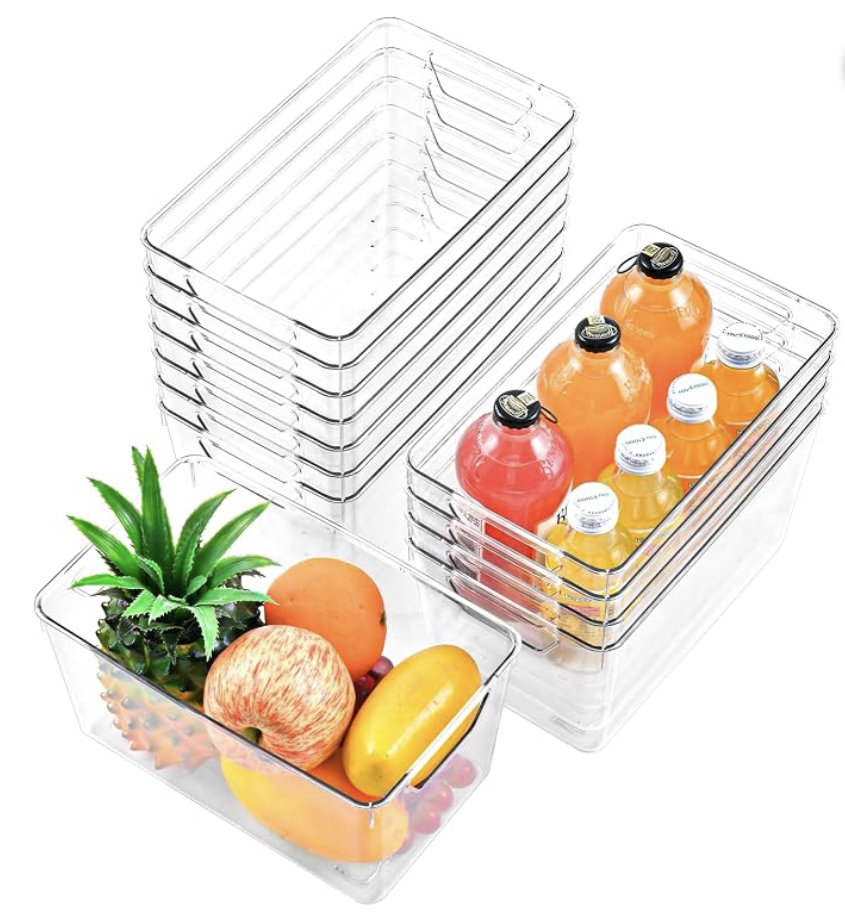
1. Clear Stackable Bins
Best for: Finding items quickly and maximizing shelf space.
Tired of digging through pantry shelves to find snacks, packets, or baking supplies?
Clear stackable storage bins allow you to see what you have without moving everything around. They work especially well for grouping packaged snacks, breakfast items, and small pantry essentials.
Choose bins that fit your shelf dimensions and stack securely to take advantage of available vertical space.
Organization Tip: Group similar items together, such as breakfast foods, baking supplies, or after-school snacks.
2. Airtight Food Storage Canisters
Best for: Keeping dry ingredients organized and protected.
Half-empty cereal boxes, flour bags, and pasta packages can make even a large pantry feel overcrowded.
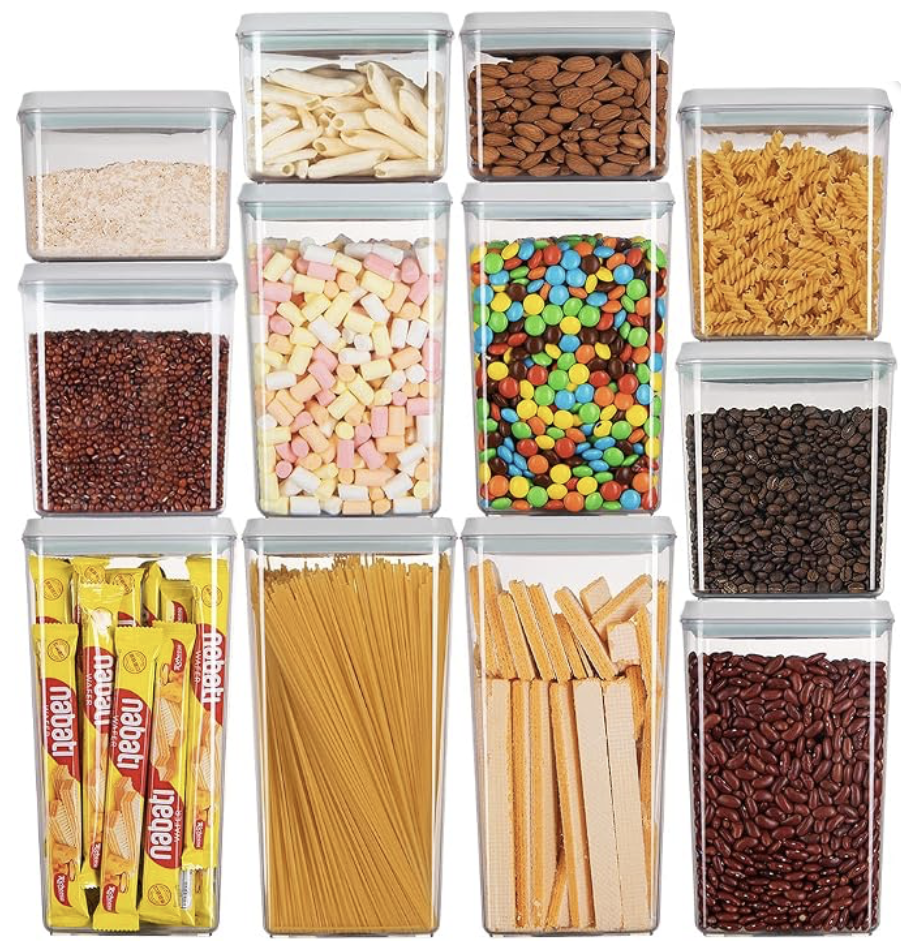
Airtight food storage canisters help create a more consistent storage system while protecting dry ingredients from moisture and exposure to air when properly sealed.
Look for food-safe containers with secure lids and sizes suited to your pantry staples.
Organization Tip: Label containers with their contents and expiration or best-by dates. Keep the original packaging information when necessary.
3. Lazy Susans (Turntables)
Best for: Reaching items in deep pantry corners.
Are condiments, spices, or small jars disappearing behind other products?
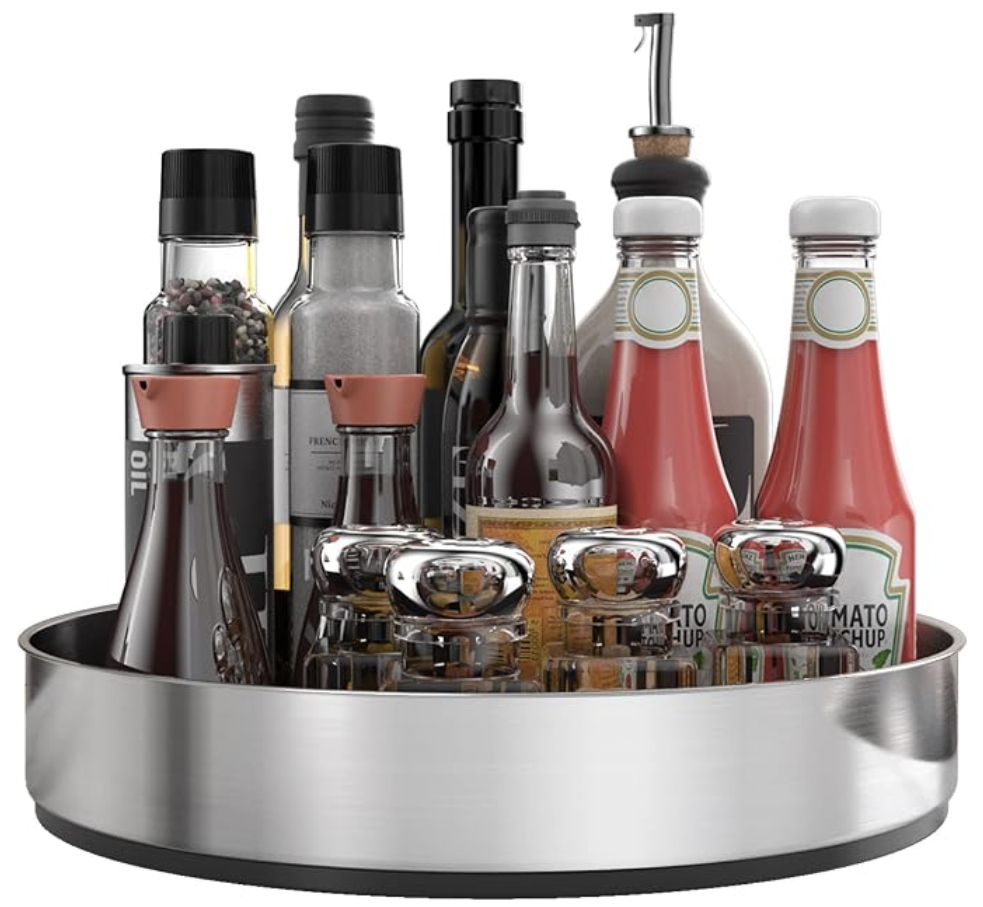
A rotating Lazy Susan makes it easier to reach items stored in corners or on deeper pantry shelves.
Instead of moving several containers to find one ingredient, simply rotate the organizer.
Organization Tip: Use separate turntables for cooking oils, condiments, and baking extracts. Choose a raised-edge model for taller bottles.
4. Adjustable Shelf Risers
Best for: Making better use of vertical pantry space.
Many pantry shelves have unused space above shorter jars, cans, and food containers.
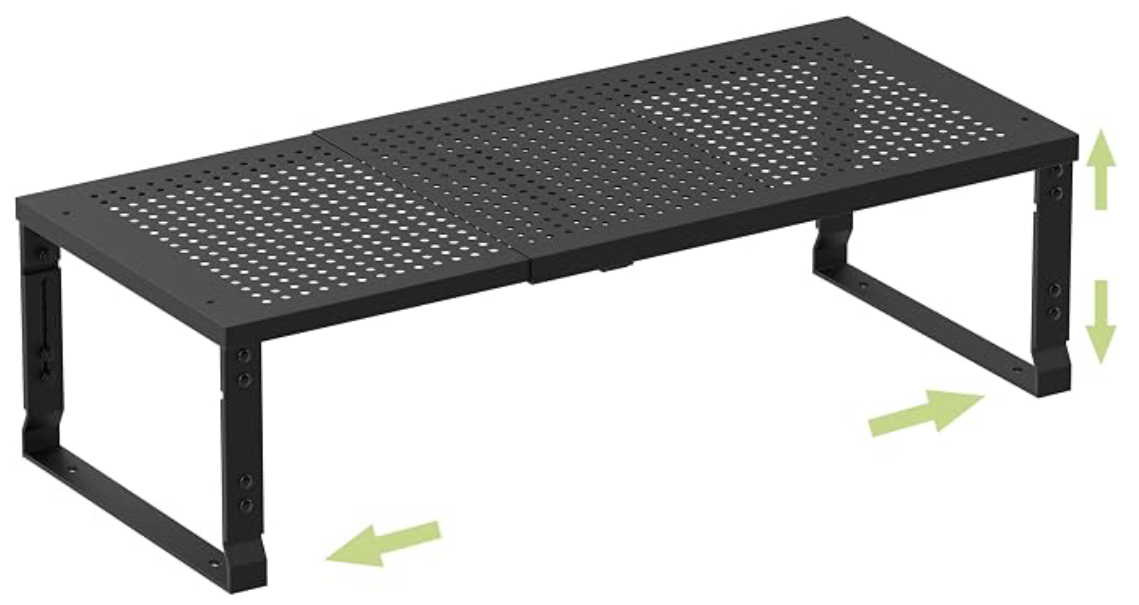
Adjustable shelf risers create additional storage levels, allowing you to organize products above and below an elevated surface.
They're especially useful in small pantries where adding permanent shelves isn't an option.
Organization Tip: Measure the height between shelves and choose a sturdy riser suited to the weight of your items.
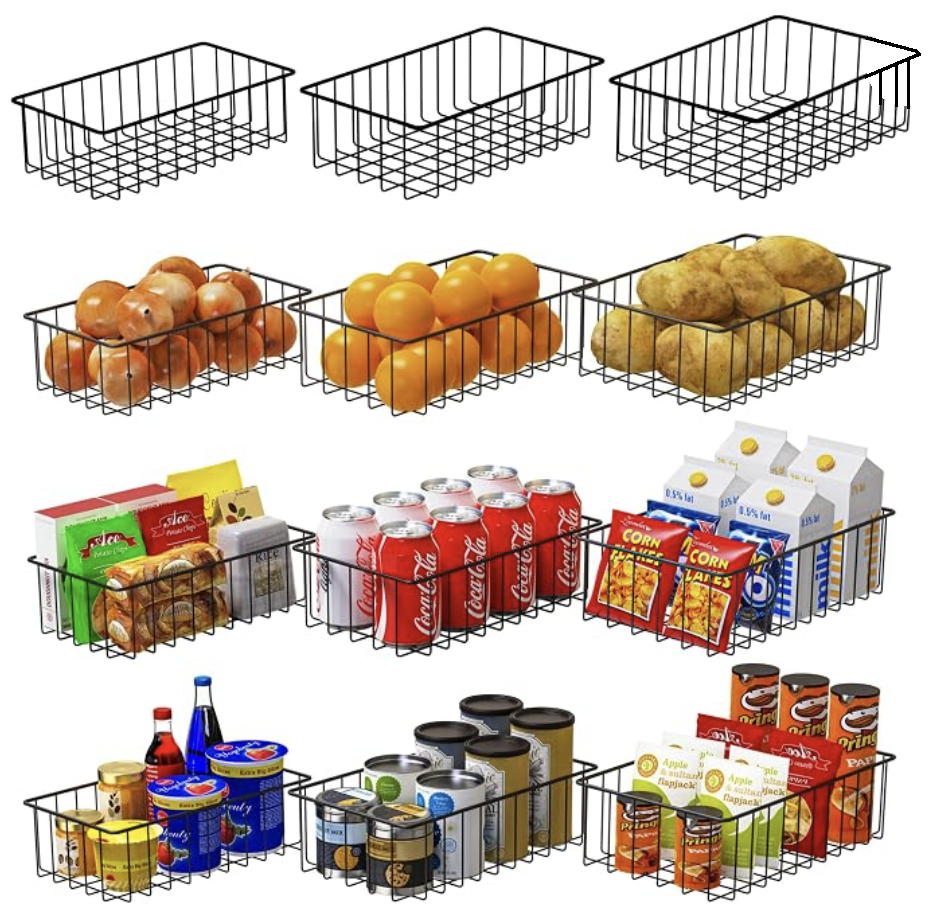
5. Wire or Metal Baskets
Best for: Containing loose packets and pantry supplies.
Small items like seasoning packets, snack bars, and packaged foods can quickly create a cluttered appearance.
Wire or metal baskets offer a convenient way to group these items while keeping them easy to access.
Open baskets also allow you to identify what is stored inside without pulling everything off the shelf.
Organization Tip: Designate a basket for baking supplies, packaged snacks, or lunch preparation essentials.
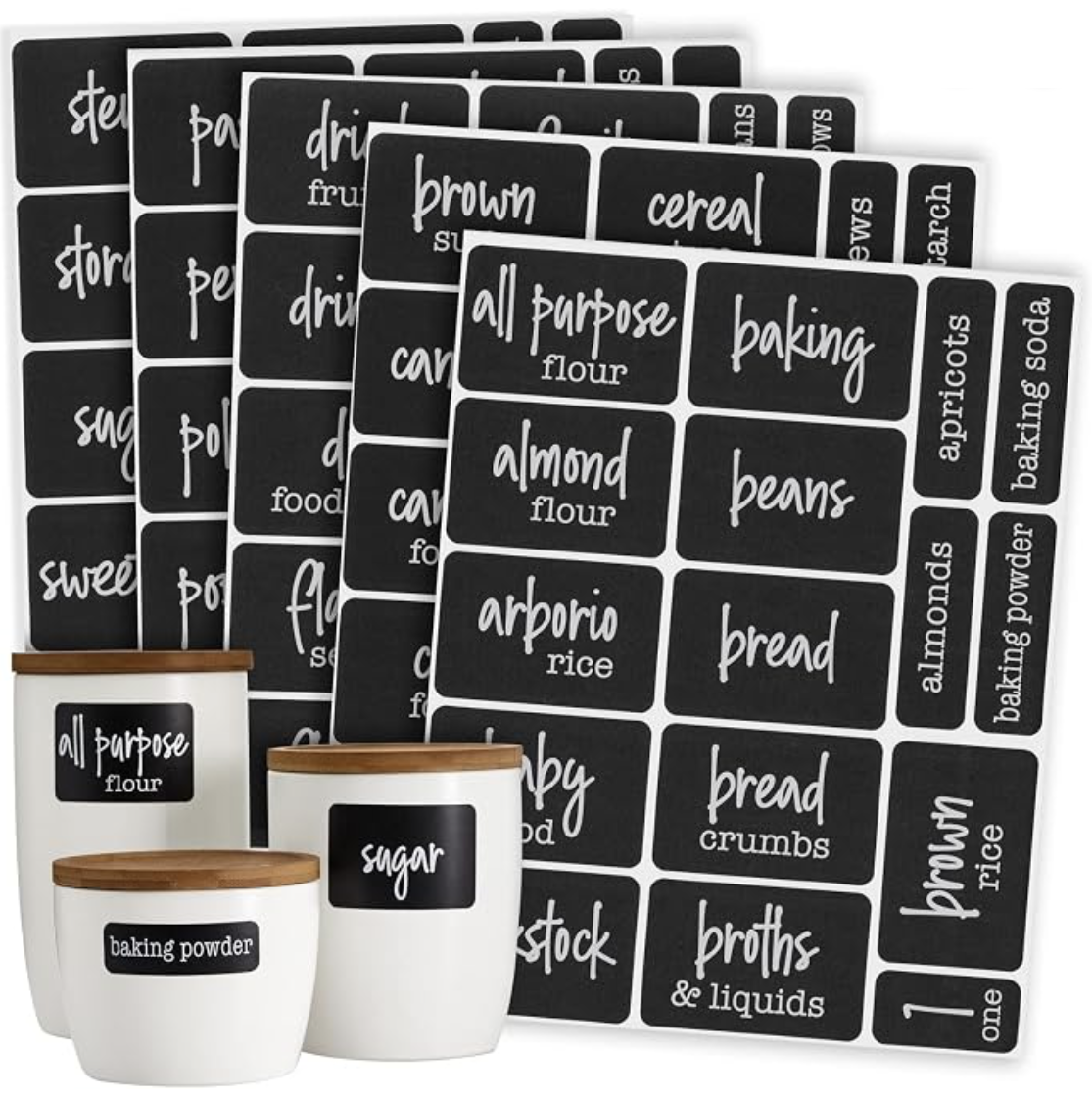
6. Chalkboard or Printable Labels
Best for: Keeping pantry categories easy to identify.
An organized pantry is easier to maintain when everyone knows where things belong.
Chalkboard and printable labels help identify storage containers, baskets, and pantry zones.
Reusable chalkboard labels are useful when container contents frequently change, while printed labels create a consistent look for permanent categories.
Organization Tip: Use simple names such as Pasta, Baking, Breakfast, Snacks, and Canned Goods.
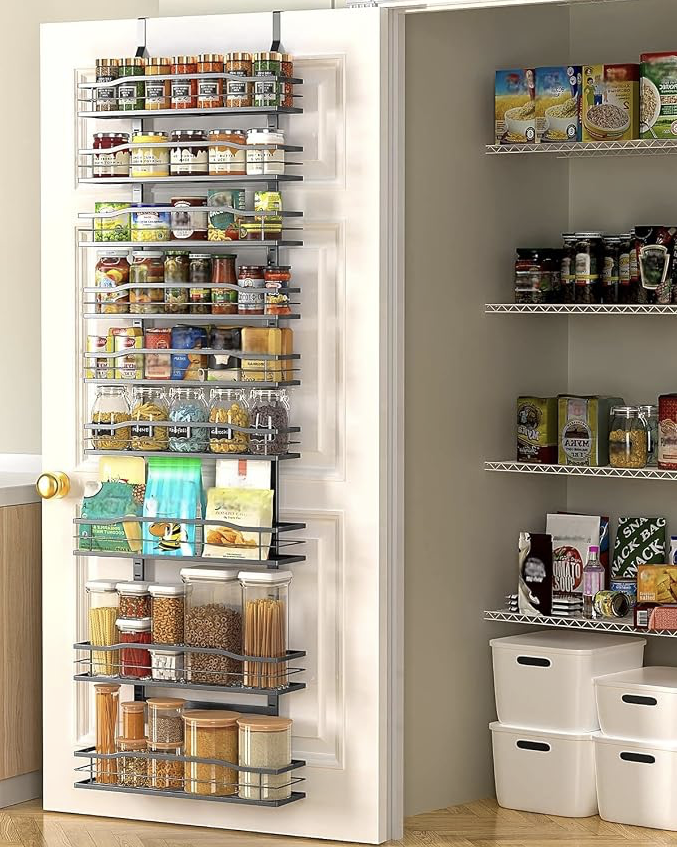
7. Over-the-Door Organizer
Best for: Creating additional storage without using shelf space.
If your pantry shelves are crowded, the back of the door may provide valuable additional storage.
An over-the-door organizer can hold lightweight spice containers, seasoning packets, snacks, and other small household essentials.
It's particularly useful for compact kitchens or pantry spaces with limited shelving.
Organization Tip: Check door clearance, the organizer's weight limits, and whether shelves or baskets will interfere with closing the door.
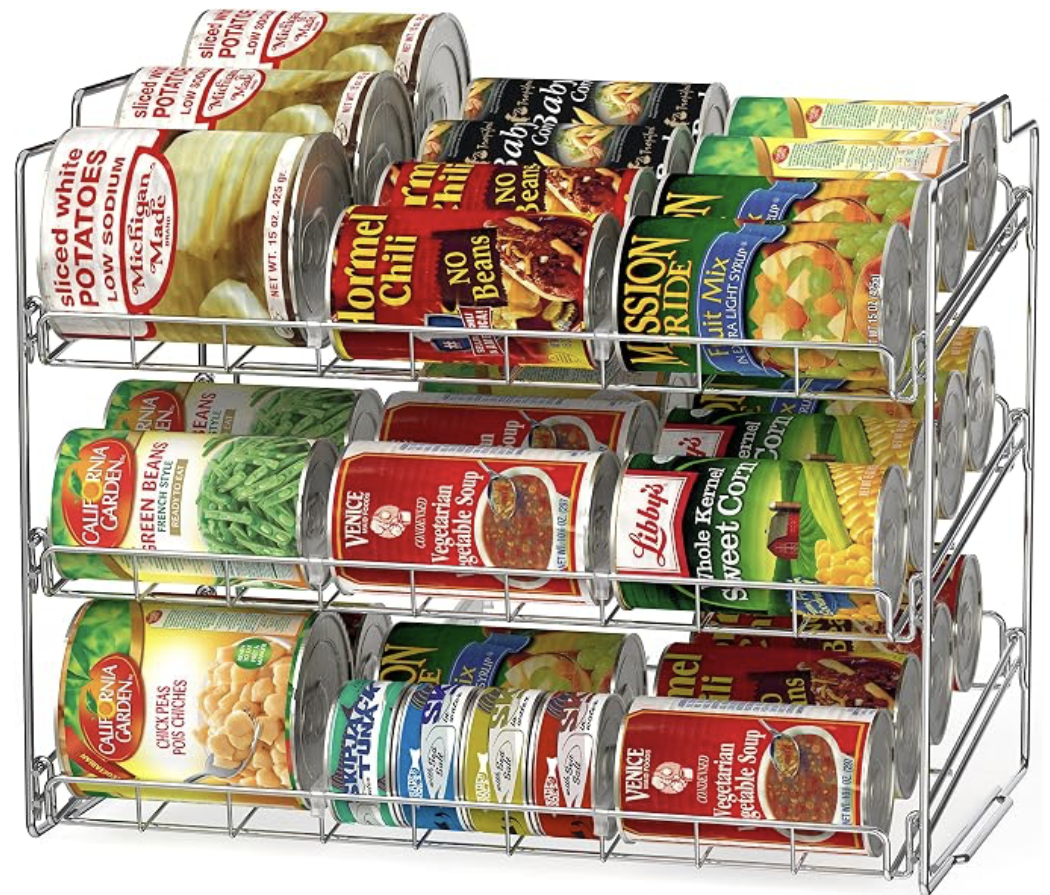
8. Can Storage Rack
Best for: Keeping canned goods visible and easier to rotate.
Stacking canned foods directly on pantry shelves can make it difficult to see what's available.
A can storage rack creates designated spaces for canned goods, making inventory easier and helping you rotate older products toward the front.
Rolling designs can be particularly convenient for regularly used canned foods.
Organization Tip: Group cans by category (vegetables, beans, soups, and sauces) and check dates before restocking.
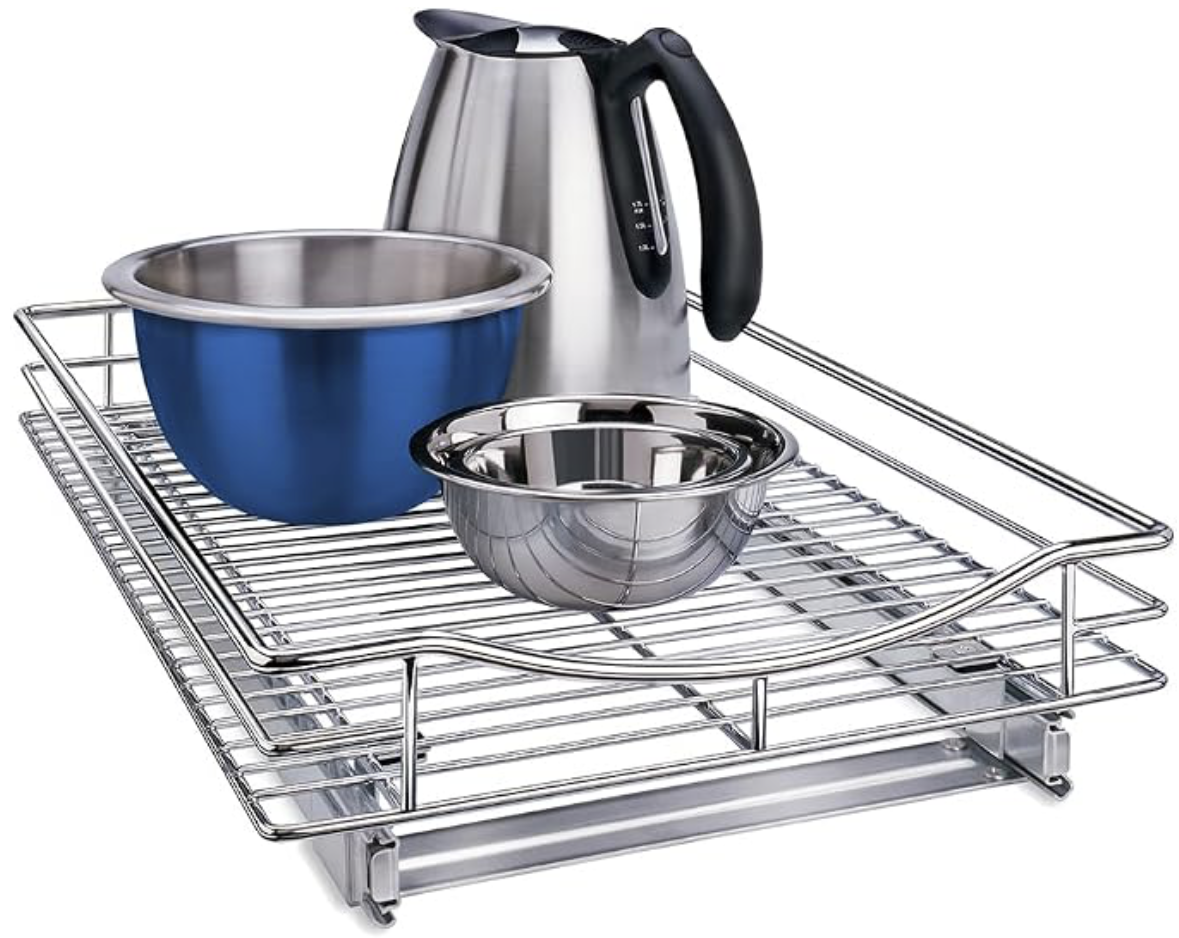
9. Pull-Out Pantry Shelf Organizer
Best for: Accessing items stored at the back of deep shelves.
Deep pantry shelves often become cluttered because the items in the back are difficult to reach.
A pull-out pantry shelf organizer helps solve this problem by bringing stored items forward instead of requiring you to remove everything in front.
These organizers can be helpful for jars, packaged ingredients, small containers, and other pantry supplies.
Some designs sit inside existing cabinets, while others require installation.
Organization Tip: Measure the interior width, depth, and height of your cabinet or shelf, and check whether the organizer needs mounting hardware.
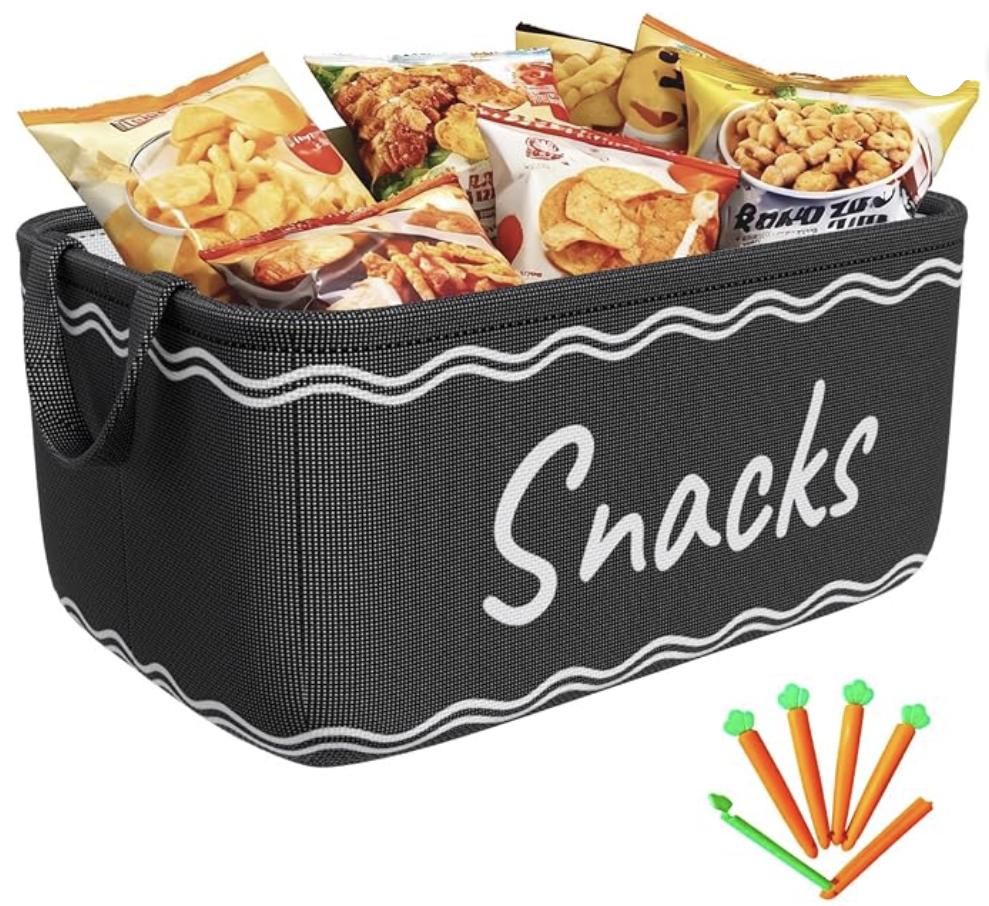
10. Snack Bins with Handles
Best for: Creating an easy-to-maintain snack station.
When snacks are scattered across multiple shelves, preparing lunches or finding a quick afternoon snack becomes unnecessarily time-consuming.
Snack bins with handles create a dedicated location for individually packaged foods.
They're particularly useful for families with school-age children, homeschool routines, or busy work-from-home schedules.
Organization Tip: Set up a designated snack station using separate bins for crackers, granola bars, and other packaged snacks.
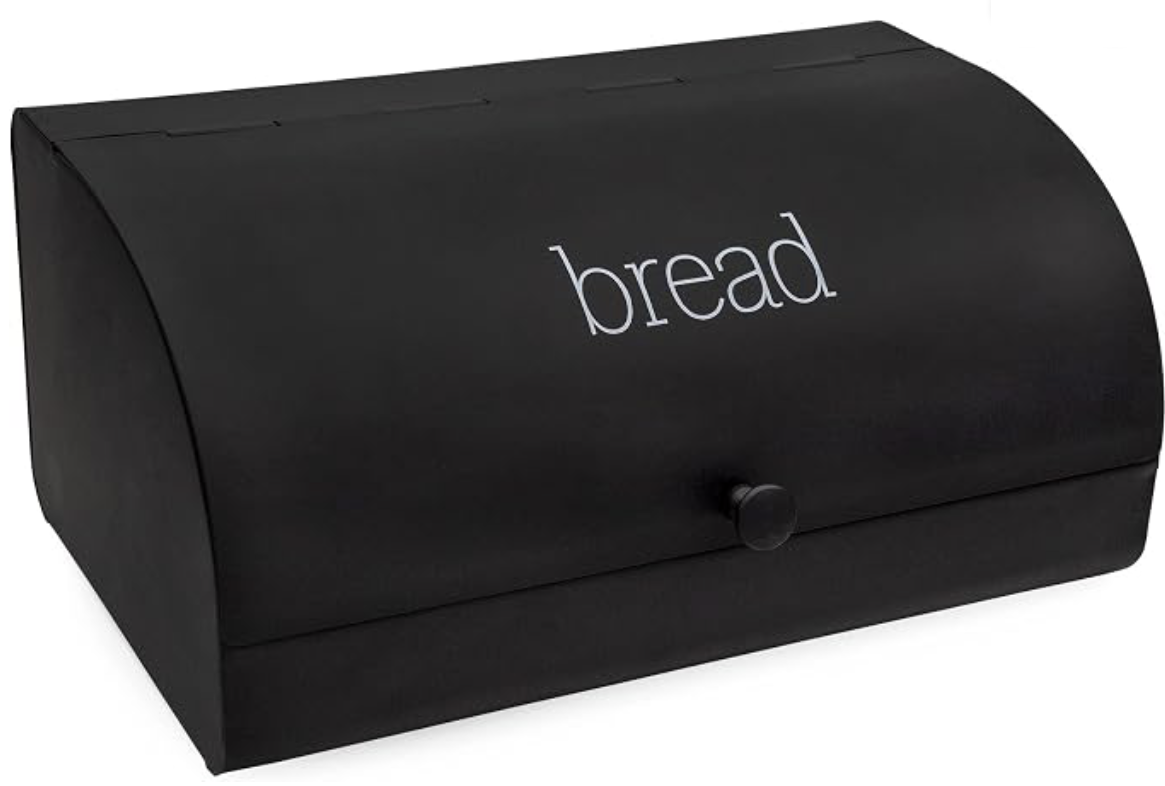
11. Bread Box or Bin
Best for: Keeping bread and baked goods in one designated location.
Bread bags, rolls, and baked goods can take up valuable space when they're left scattered across shelves or countertops.
A bread box or designated storage bin helps keep these items together and makes the pantry look more orderly.
Choose a size appropriate for your household and follow storage instructions for the specific bread products you purchase.
Organization Tip: Create a bread and breakfast section near spreads or other frequently used breakfast supplies.
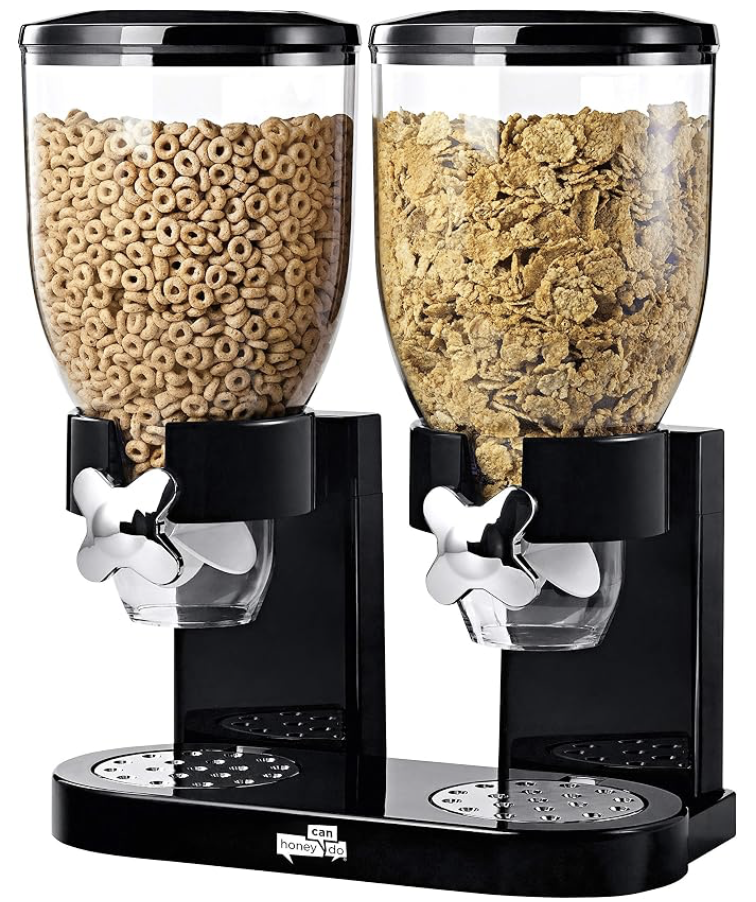
12. Cereal Dispensers
Best for: Organizing breakfast items and simplifying morning routines.
Multiple cereal boxes can quickly crowd pantry shelves.
Cereal dispensers provide a dedicated storage solution and may make it easier to see when supplies are running low.
Depending on the design, they can also make portioning cereal more convenient.
Organization Tip: Choose a food-safe model that's easy to clean, seals securely, and is appropriate for the people using it.
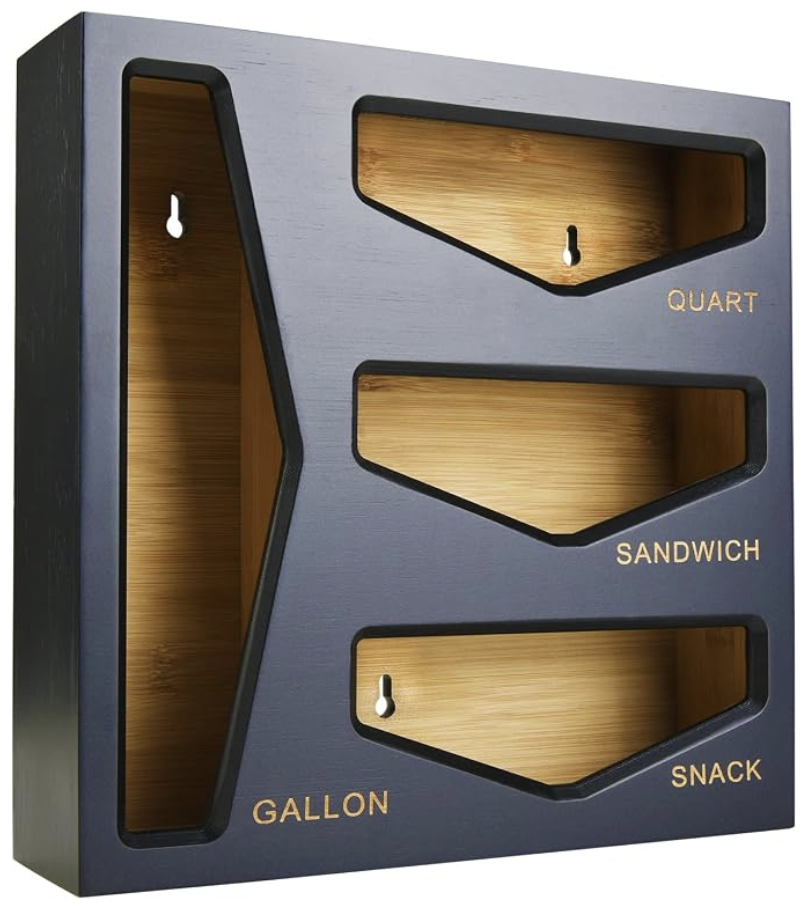
13. Food Wrap & Storage Bag Organizer
Best for: Organizing foil, plastic wrap, and food storage bags.
Are boxes of aluminum foil, plastic wrap, parchment paper, and food storage bags taking over a pantry shelf or kitchen drawer?
A food wrap and storage bag organizer gives these everyday essentials a designated place.
Depending on the design, compartments may accommodate different bag sizes, while built-in dispensers can help keep rolls of wrap accessible.
This is especially useful for meal preparation, packing lunches, and storing leftovers.
Organization Tip: Position the organizer near your food preparation area so bags and wraps are easy to reach when needed.
14. Command Center Notepad or Chalkboard
Best for: Keeping track of groceries and household essentials.
An organized pantry isn't just about containers. It's also about knowing what you have and what needs to be replenished.
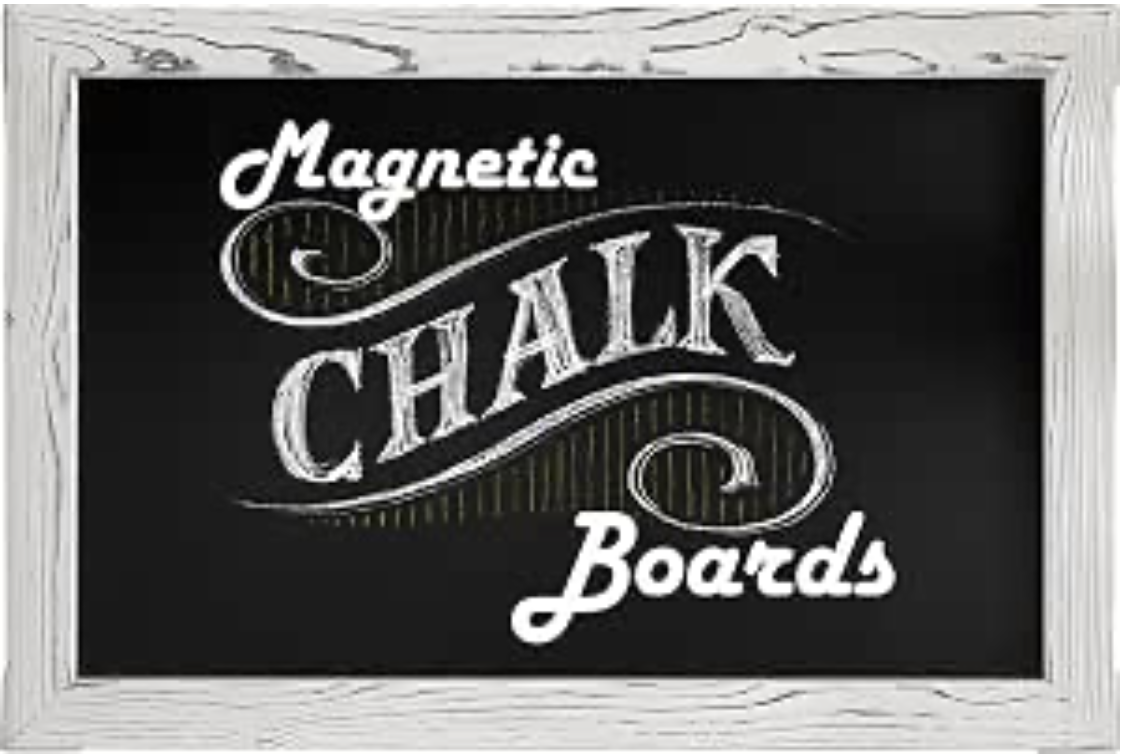
A small notepad, dry-erase board, or chalkboard mounted inside the pantry door makes it convenient to track grocery needs.
When the last package of an item is used, add it to the shopping list immediately.
Organization Tip: Divide your list into categories such as Pantry Staples, Snacks, Baking Supplies, and Household Essentials.
15. Step Stool (Compact/Foldable)
Best for: Safely accessing higher pantry shelves.
Top pantry shelves can provide valuable storage for items that aren't needed every day.
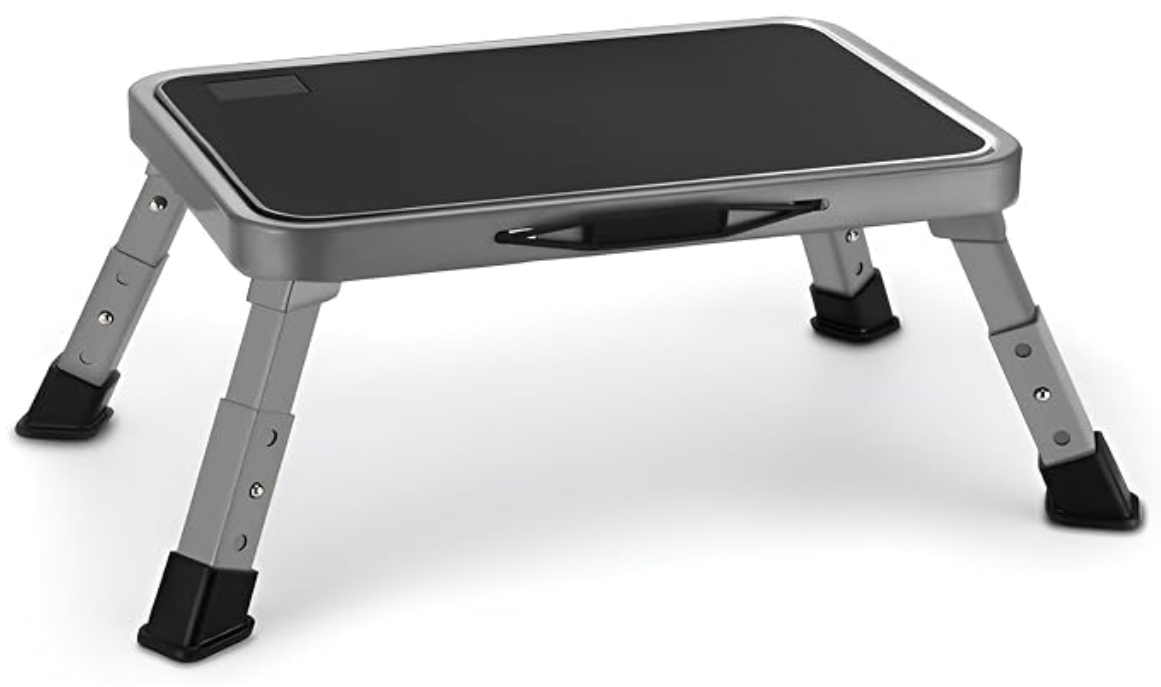
A compact folding step stool makes these areas easier to reach without keeping a large ladder in the kitchen.
Choose a stable, slip-resistant model with an appropriate weight rating.
Organization Tip: Reserve higher shelves for lightweight, less frequently used items. Use the step stool only on a level surface and keep it away from children when not in use.
How to Keep Your Pantry Organized After the Makeover
Purchasing organizers is only the beginning. A practical maintenance routine can help keep your pantry functional over time.
Create a 10-Minute Weekly Pantry Reset
Once a week, take a few minutes to:
- Return misplaced items to their designated zones.
- Check for nearly empty containers and missing essentials.
- Move older packaged foods toward the front.
- Wipe down shelves or containers as needed.
- Update your grocery list.
Make Organization Easy for the Whole Household
Store frequently used items where they're easy to reach, keep categories consistent, and use labels that everyone can understand.
The simpler the system, the easier it is to maintain.
Avoid Purchasing Organizers You Don't Need
One of the biggest pantry organization mistakes is purchasing storage products before evaluating the available space.
Begin with the most challenging area. You may discover that two or three well-chosen organizers solve most of your storage problems.
Final Thoughts: A More Organized Pantry Starts With Simple Changes
Creating a clutter-free pantry doesn't require a complete kitchen makeover or an expensive collection of matching containers.
Clear bins can simplify finding snacks. Airtight containers help organize dry ingredients. Pull-out organizers make deep shelves more accessible. And a small grocery list station can help you stay on top of household essentials.
Whether you're organizing a small pantry, preparing family meals, packing lunches, or simply trying to reduce kitchen clutter, these 15 pantry organization products offer practical ways to create a more functional space.
Ready to get your pantry organized?
Start with one shelf, choose the products that solve your biggest storage challenges, and build a system that works for your household.
Affiliate Disclosure: Some links in this article are affiliate links. I may receive a commission from qualifying purchases at no additional cost to you. As an Amazon Associate, I earn from qualifying purchases.